
 |
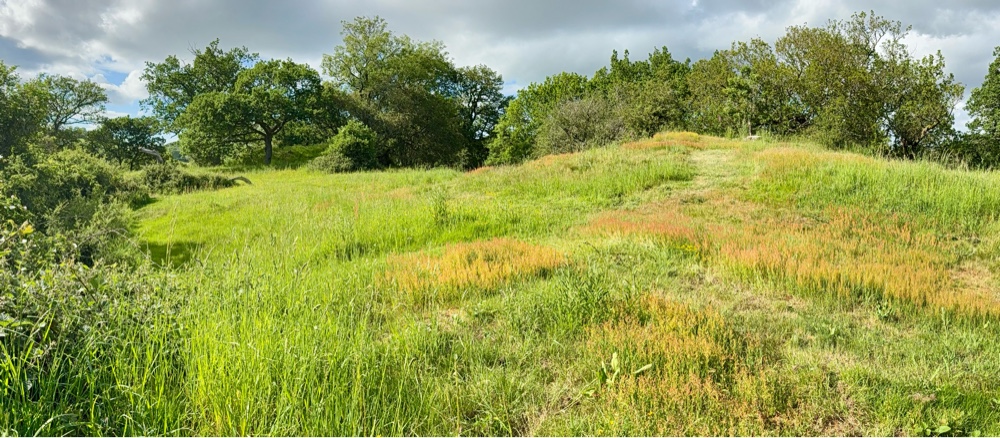
This is a report on the health of the Pinfold and Castle meadows.
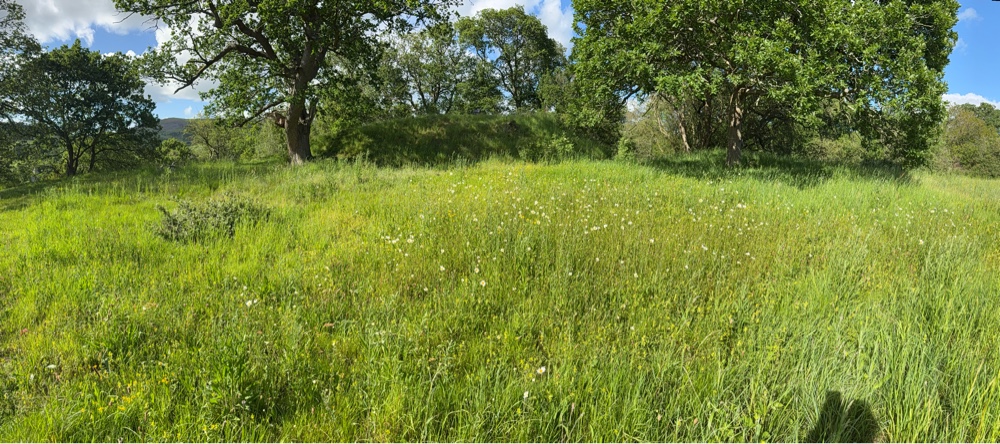
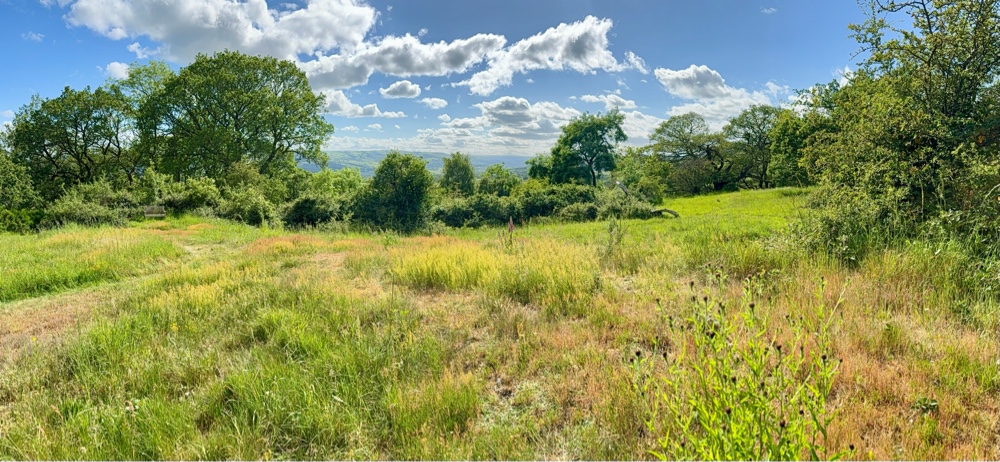
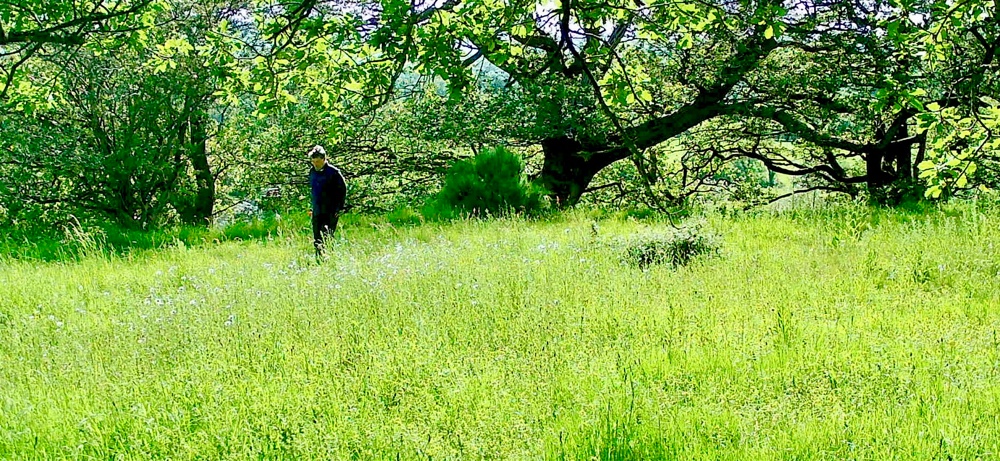
Based on the provided landscape panoramas and macro close-ups, this wildflower meadow appears to be in excellent ecological health. It showcases classic indicators of a well-established, low-nutrient, and highly biodiverse semi-natural grassland habitat typical of temperate zones like the UK.
Identified Species
An analysis of the plant life across the images reveals a robust mix of indicators, wetland edge plants, and structural flora:
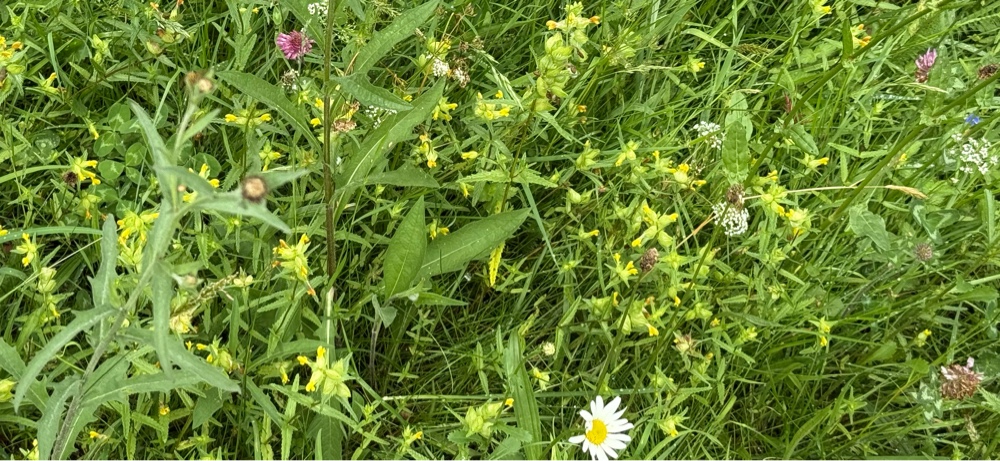
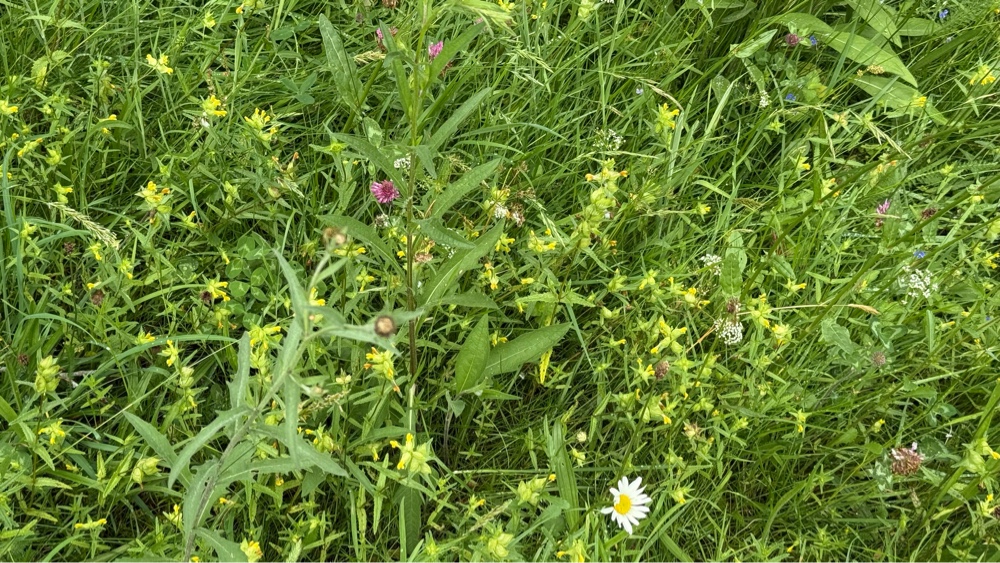
Yellow Rattle (Rhinanthus minor): Seen abundantly in image_7.png, image_8.png, and image_9.png. This is a keystone species for meadow health.
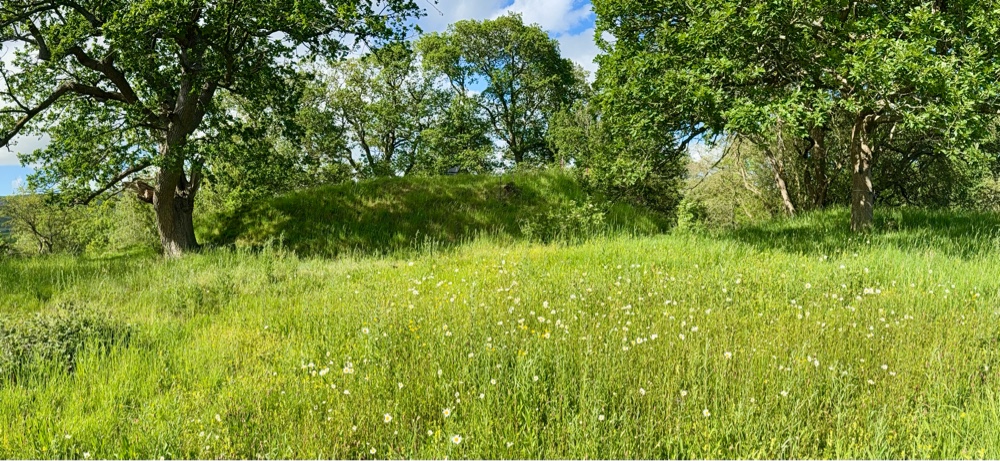
Oxeye Daisy (Leucanthemum vulgare): Visible dotted throughout the meadows in image_4.png and image_5.png, and close up in image_6.png, image_8.png, and image_9.png.
Common Knapweed (Centaurea nigra): Identified by its distinct thistle-like, unexpanded brown composite heads in the foreground of image.png and scattered in image_8.png/image_9.png.
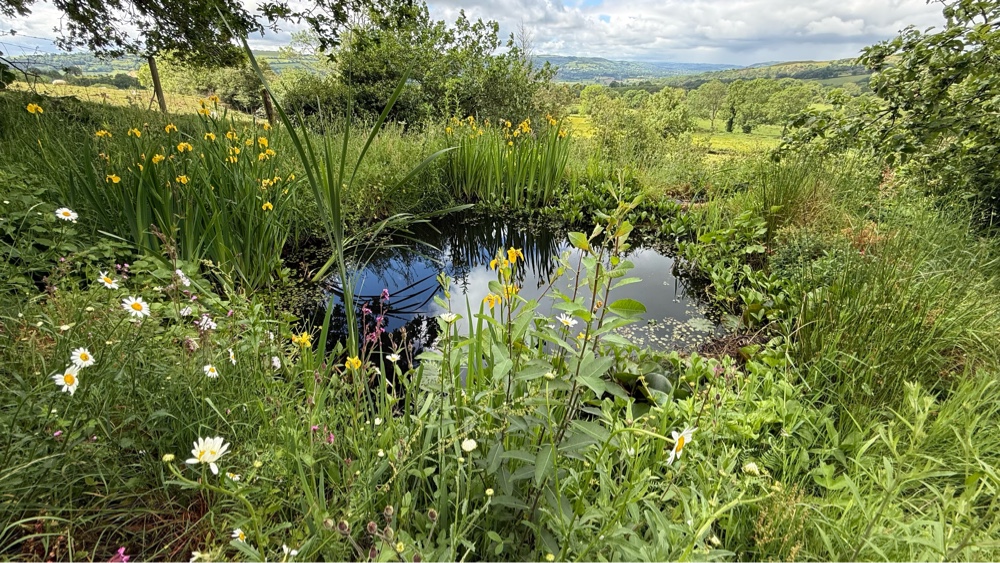
Yellow Iris / Yellow Flag (Iris pseudacorus): Fringing the healthy wildlife pond in image_6.png.
Red Clover (Trifolium pratense): Providing valuable nectar points, visible in image_8.png and image_9.png.
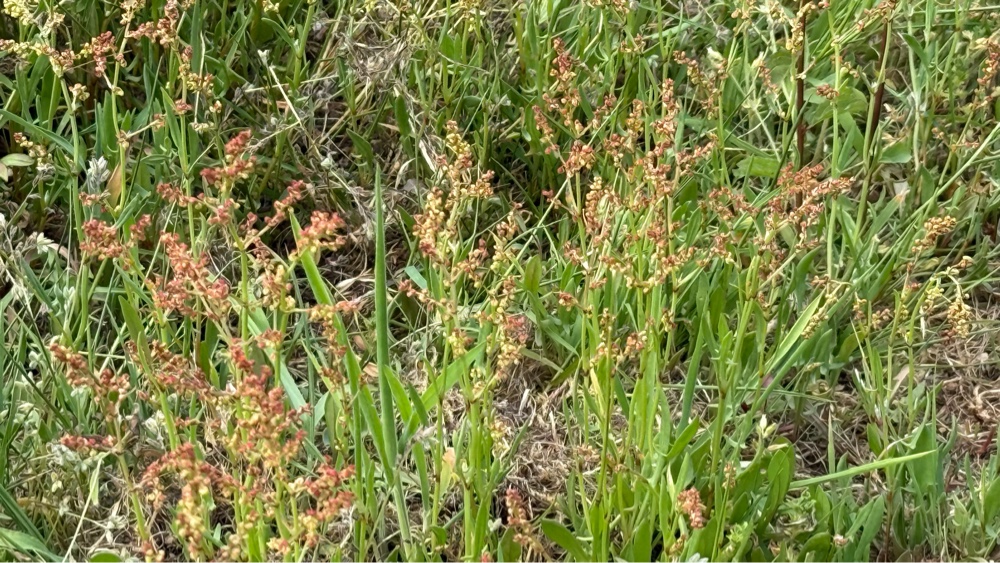
Common Sorrel / Sheep's Sorrel (Rumex acetosa / acetosella): Creating the distinct, reddish-brown hazy patches across the hillsides seen in the mid-ground of image.png and image_2.png, with a macro view in image_10.png.
Foxglove (Digitalis purpurea): A solitary spike stands near the central scrub line in image.png.
English Oak (Quercus robur): Mature, sprawling canopy trees lining the meadow borders, notably in image_3.png, image_4.png, and image_5.png.
Health Assessment
1. High Density of Yellow Rattle (The "Meadow Maker")
The sheer abundance of Yellow Rattle (image_7.png) is the strongest indicator of a thriving meadow. Because it is a hemi-parasite that feeds on the root systems of aggressive grasses, it naturally suppresses grass dominance. This keeps the turf thin and allows delicate wildflowers the space and light they need to germinate and thrive.
2. Low-Nutrient Soil Profile
The presence of widespread sorrel (image_10.png) and the yellowish, fine-textured grass matrix suggest that the soil has appropriately low fertility. High-nutrient soils (often caused by agricultural fertilizers) lead to dense, overgrown rye-grasses that choke out wildflowers. The flora here confirms a beautifully balanced, low-nutrient ecosystem.
3. Structural Diversity and Ecotones
The meadow transitions smoothly into edge habitats (ecotones) featuring mature oak trees and native scrub (image.png, image_4.png). This variation in height and density provides vital nesting sites, shelter, and microclimates for birds, small mammals, and overwintering insects.
4. Aquatic Integration
The inclusion of a clean, well-vegetated pond (image_6.png) bordered by Yellow Iris significantly elevates the biodiversity rating. It introduces a permanent water source, supporting amphibians, dragonflies, and aquatic invertebrates that complement the meadow's terrestrial insect populations.
Summary
This meadow is an ecological success story. The combination of parasitic indicator plants, a rich variety of perennial wildflowers, a surrounding ancient tree canopy, and an integrated wetland habitat makes it an ideal sanctuary for pollinators and native wildlife
 |
 |
 |
 |
 |
 |
 |
 |
- Oxeye daisy
- Red clover
- Ribwort plantain
- Yellow rattle (very abundant)
- Yarrow
- Several grasses
- A thistle or sow-thistle type plant
- Possible knapweed
- Buttercup-type flowers
- Additional broadleaf meadow herbs