
 |
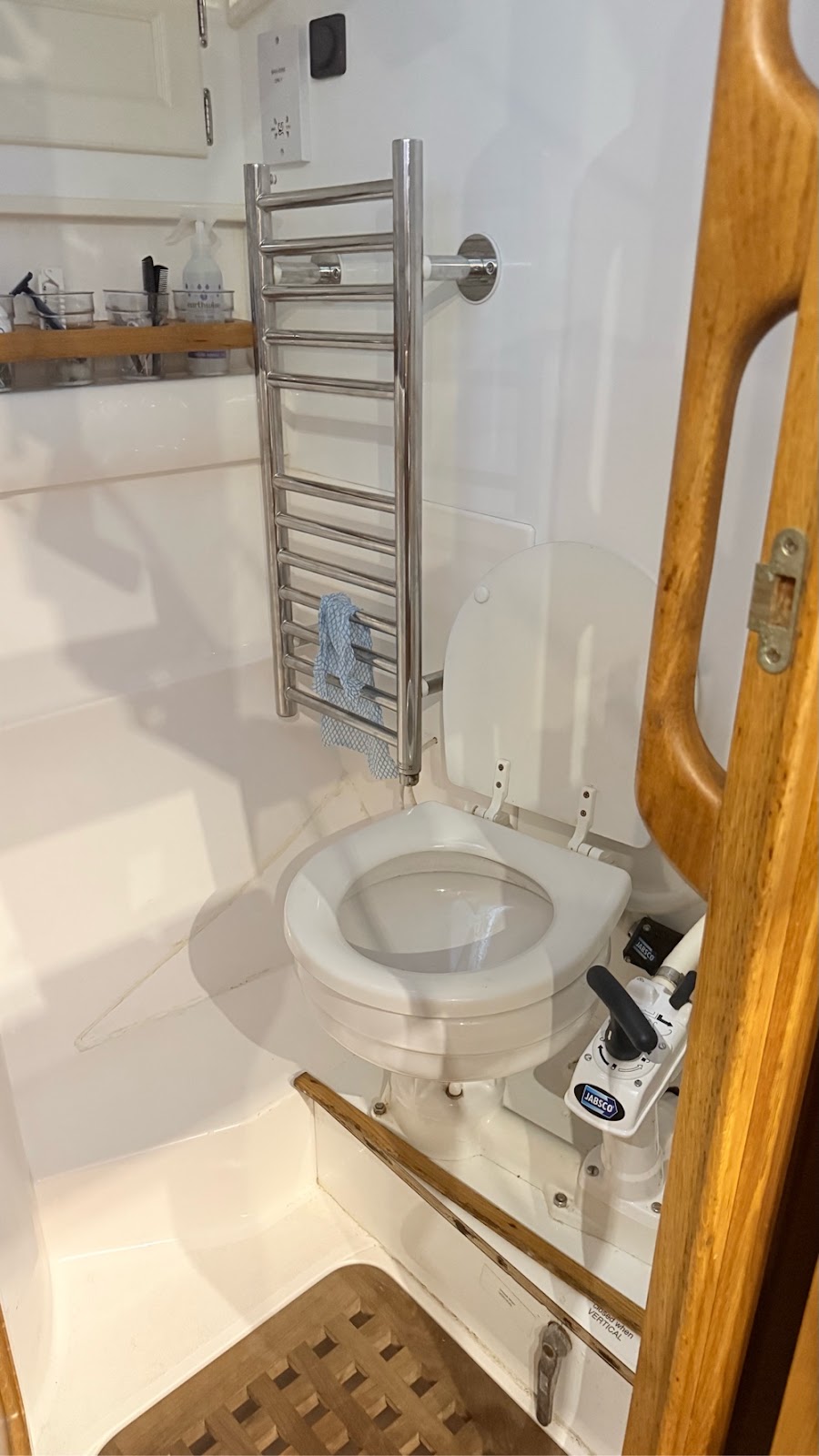
Pumping a marine toilet forces water (and other stuff) from the toilet to our holding tank and, on our last day in Great Barrier Island, the resisting pressure increased alarmingly with each stroke until it felt like it was going to blow a gasket. There was no need to fix it in Smokehouse Bay as we have a second toilet so our memories of this cruising paradise remain undiminished by the wrestling match that would ensue.
Our heads (marine toilet) have only blocked twice in 20 years and each time they have chosen somewhere exotic to give up the ghost. At 71 degrees north, on Greenland’s east coast, the water intake spluttered to a halt in Scoresby Sound when we were surrounded by icebergs. The heroic skipper dived overboard to scrape off an exuberant growth of crustacea that had made the external strainer their home. At least that problem was on the intake side so not a messy affair though an Arctic dive is always a bracing experience!
Five years later, our 100 litre holding tank seemed to set solid after a prolonged stay in Chesapeake Bay. We tried to discharge the accumulated effluent into the Gulf Stream when rounding Cape Hatteras but Shimshal had become chronically constipated. In Moorhead City we miscalculated the tide and, as a result, partially dried out on a mud bank. Once the water had receded below the level of our holding tank outflow we took to our dinghy and, tentatively, intubated the through-hull with an old fibreglass sail batten. Within a few minutes the dinghy was floating in a brown sea and, fortunately, we didn’t fill the dinghy in the process!
In Panama we paid an eager Frenchman double-time to re-plumb the sanitary hose on both of our marine toilets. Greased by his own sweat in the equatorial heat, he replaced 10 metres of calcified hose with Raritan’s finest, odourless, 1.5” hose specially flown in from Miami.
With that most dastardly job done we thought our toileting troubles were over. But we hadn’t bargained on New Zealand’s mineral rich waters which precipitate out to form ‘pipe-cement’ as soon as a little urea is added.
And so it was that we limped back into Whangarei firing on our last remaining toilet and dreading the future battle with the soiled pipe which could not, this time, be delegated to the ever-willing Pierre. It seems that wise Kiwis tend to decline toilet jobs - especially when blocked.
On day one of the great toilet battle I tried to rod the stricken pipe with a 30’ metal spring that Shimshal carries for that exact purpose. Approximately 1.5 metres in (and with 4.5m to go) a firm resistance was met which refused to succumb to some vigorous wiggling.
On day 2 , the decision to remove and replace was taken. This involved retrieving it from its sinuous route from toilet to holding tank. No trivial task.
But first I had to source a replacement which meant a bike trip across town to All Marine. Neither of us were sure how we would cycle back wrapped up in a 6 metre x 38mm white cobra. Fortunately, Mike and Anne whisked us off by Toyota to buy the hideously expensive pipe that crashed the Barclaycard.
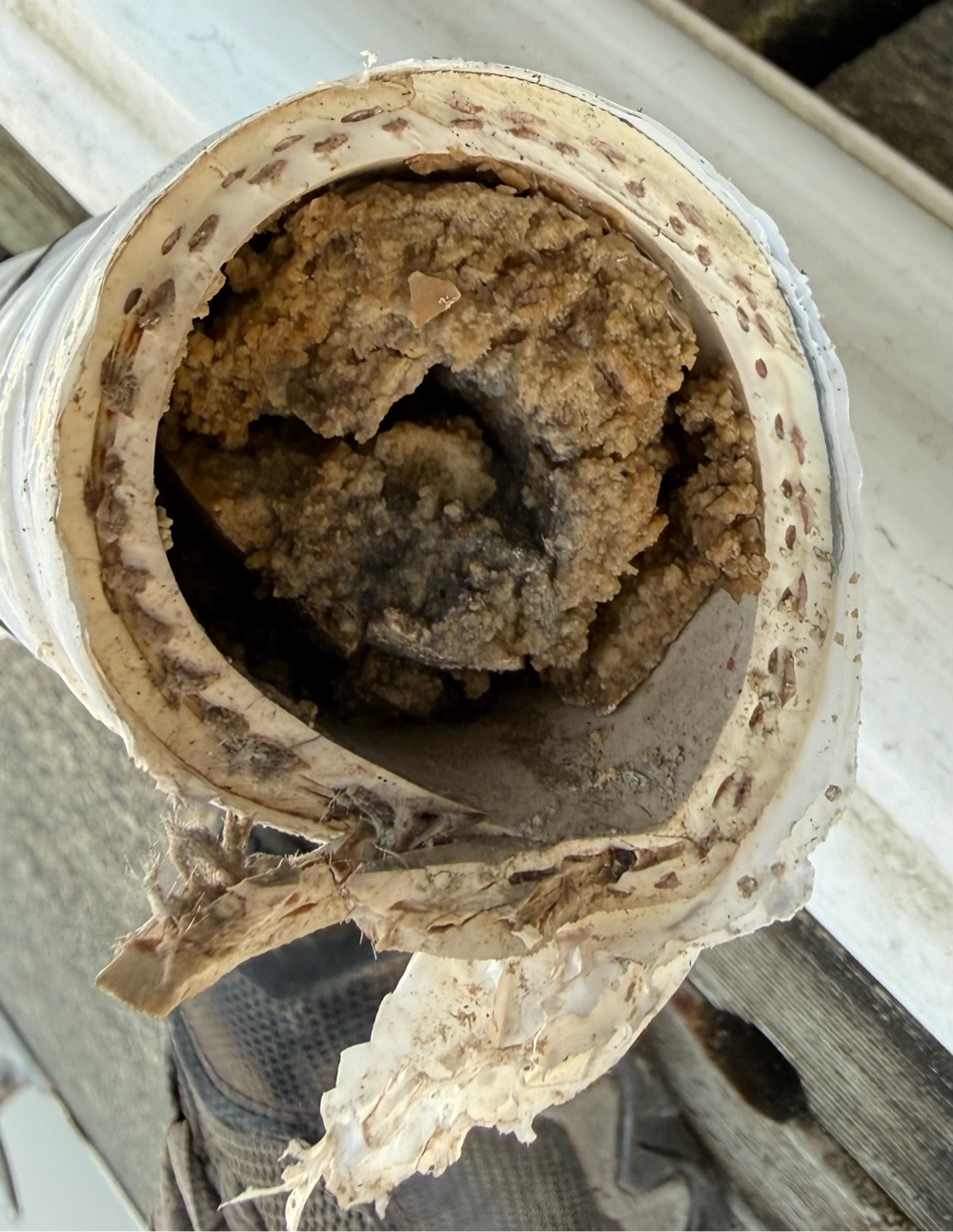
On day 3, I cut the old pipe in half to ease its removal and soon our boat (and home) was smelling like a sewer. The whole pipe was occluded by magnesium ammonium phosphate hexahydrate crystals (otherwise known as STRUVITE) that were stained a faeculent brown colour. STRUVITE is formed when urine is added to seawater and allowed to stagnate in a long pipe. Add a little tropical heat and a lengthy layup and soon our 3 year old, odour-free pipe looked like a knackered coronary artery that was definitely not odour free!
On day 4, the writhing pipe was installed between toilet and aft locker (lazarette) in readiness to connect to the holding tank. That last connection was, of course, the crux. The connection had to be made just beyond an arm’s reach at the upper, outermost recess of a very cramped lazarette. Extreme boat yoga forced me into an avoidance strategy of tackling multiple other, less obnoxious and intimidating boat jobs.
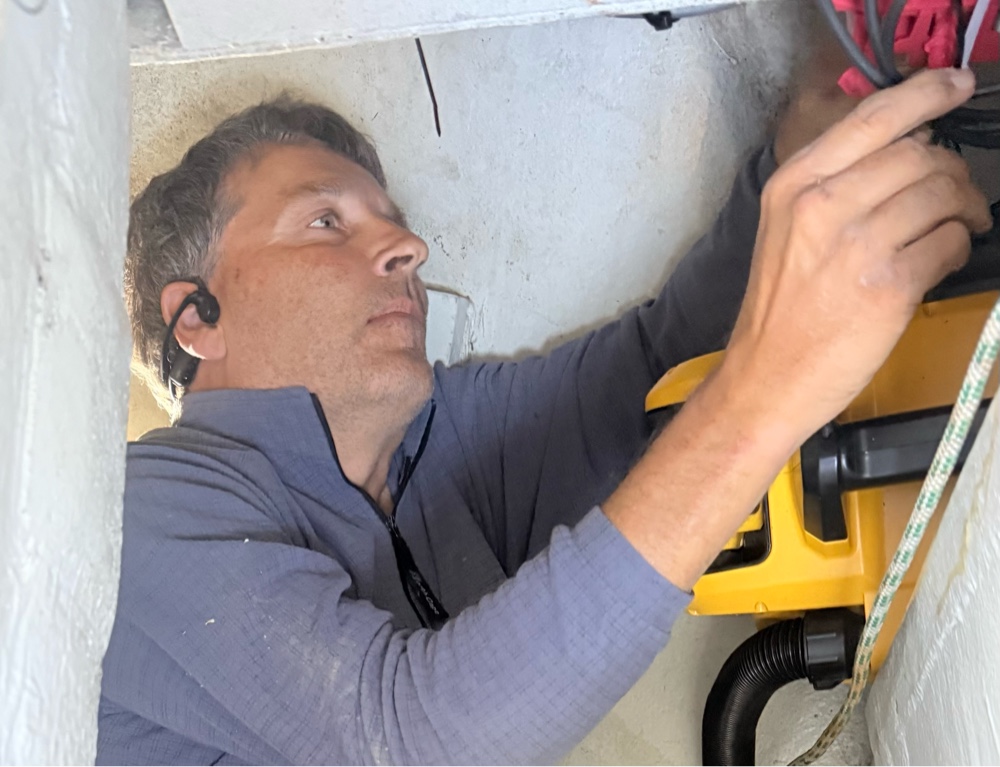
By day 5 the avoidance strategy had failed and I was forced into the lazarette, where I wriggled between a forest of wires and pipes until, with my longest flathead screw driver, I could undo the hose clips. Hauling on the detached pipe had inevitable messy consequences and that took a while to clear up!
It was late on day 5, when Sally was off partying (and joking about my slow progress) with all the true marine professionals in the boatyard, when a miracle happened. Somehow my arms seemed to grow a few inches allowing me to slip the new pipe onto the tank connector and crank up the hose clips to seal the deed.
Flushed with success and smeared with brown STRUVITE, I multiplied 1.9cm squared by pi and then multiplied again by the 600cm length of the pipe. The answer is the amount of fresh water that we will be pumping through the pipe work with each visit to ensure that never again will urine mix with mineral-rich seawater. The answer is a staggering 6.8 litres!
 |
 |